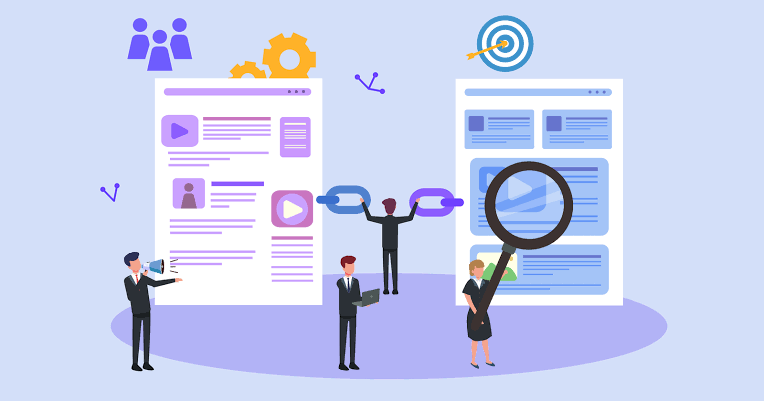
For a business trying to grow online, getting noticed by the right people can be as challenging as building a good product. Search visibility is one part of that effort, and links from other websites can help search engines discover and assess your pages. But backlink building is not simply a matter of collecting as many links as possible. The useful links tend to come from relevant sites, offer readers a reason to click, and sit within a broader effort to publish information worth sharing.
A backlink is a link on one website that points to another. Search engines may treat links as signals of discovery and credibility, but not every link carries the same value. A mention on a respected site in your field is different from a link on an unrelated page created mainly to sell placements. Before choosing a tactic, it helps to understand how backlink building works and what makes a link useful rather than merely present.
Start with a reason to earn links
Link building is easier to plan when a business knows which pages deserve attention. That might be a detailed service page, a practical guide, original research, a useful calculator, or a clear explanation of a complicated topic. A page should answer a real question or provide something another publisher can use. If it offers little beyond a sales pitch, outreach alone is unlikely to make it a compelling reference.
Set a specific objective before contacting websites. A local company may want to strengthen visibility in its region; a software business might aim to reach industry publications; an online shop could create a guide that helps customers choose between products. The objective shapes the sites to approach and the content to offer. It also keeps the campaign from becoming a spreadsheet exercise focused only on link counts.
Choose a method that fits the story
Guest posting can work when the proposed article genuinely suits the publication’s audience. The strongest pitches bring a distinct perspective, useful expertise, or a well-developed example, rather than a lightly rewritten company blog post. Read the site first, follow its submission standards, and make sure the article would still be worthwhile if it contained no link to your business.
Digital PR uses newsworthy information, expert commentary, or original data to attract coverage from journalists and publishers. A small business does not need a huge research budget to contribute: a thoughtful response to a timely industry issue or a useful local survey may be enough to start a conversation. Claims should be accurate and easy to verify, and a campaign should not rely on exaggerated headlines that could undermine trust.
Niche edits involve adding a link to an existing article where it provides a relevant resource or clarification. This approach can be useful if the page already discusses the subject, but context matters. A link inserted into an old post simply because a placement is available may feel unnatural to readers. Review the surrounding paragraph, the page’s quality, and whether the linked resource truly improves it.
Brand mention reclamation is another practical opportunity. A writer may refer to a business, product, or expert without linking to it. A polite note can point out the mention and offer the appropriate page, while leaving the publisher free to decide. This is not an automatic entitlement: the mention may be intentional, and the page may not need a link. Keep the request brief and respectful.
Evaluate quality beyond metrics
Third-party scores can help organize research, but they are not a substitute for judgment. Visit a potential site and ask whether its subject matter overlaps with your audience, whether its articles appear to serve readers, and whether it has a coherent editorial purpose. Look at recent posts, authorship, outbound links, and signs that content is produced solely to host paid placements. A high score cannot make an irrelevant or untrustworthy page a good fit.
Consider the link’s placement and destination, too. A contextual link in a useful discussion is generally more natural than a footer link repeated across dozens of pages. The destination should support the surrounding claim and give the reader a logical next step. Avoid forcing exact-match keywords into anchor text; descriptive, natural wording is easier to understand and less likely to make an editorial sentence feel engineered.
Build a manageable campaign
A modest plan is often more sustainable than a burst of mass outreach. Make a shortlist of relevant publishers, note why each one is a fit, and tailor each message. Track the contact, proposed idea, response, publication status, and resulting link. Follow up once after a reasonable interval, but do not keep sending generic messages after a clear refusal.
Small teams can divide the work according to their strengths. Someone with subject expertise can shape the article or provide commentary, while another person researches publications and manages outreach. If a business needs help with writing, design, research, or campaign administration, a freelance marketplace such as Osdire can be one place to find independent support across different service categories. Clear briefs, agreed deliverables, and a review process still matter; outsourcing a task does not remove the need to check accuracy and quality.
Keep a record of placements and review results over time. Useful measures can include relevant referring sites, referral visits, enquiries, and whether the target page is becoming more visible for appropriate searches. Rankings move for many reasons, so avoid attributing every change to a single link. Regularly check that links still work and that the pages hosting them remain appropriate.
Think in terms of reputation
The safest long-term approach is to earn links through relevance and usefulness, not shortcuts. Be cautious of guaranteed rankings, bulk packages with little detail, private networks presented as editorial publications, and schemes that exchange links at scale. These tactics can waste money, create reputational problems, or expose a site to search engine action. A slower campaign built on good material and genuine relationships is less dramatic, but it is easier to explain and maintain.
Backlink building works best as one part of a healthy online presence. Publish pages that deserve attention, choose outreach methods suited to your story, and assess every opportunity from the reader’s point of view. The goal is not simply to make a link appear; it is to give another website a sound reason to reference your work and give its audience a useful path to follow.